
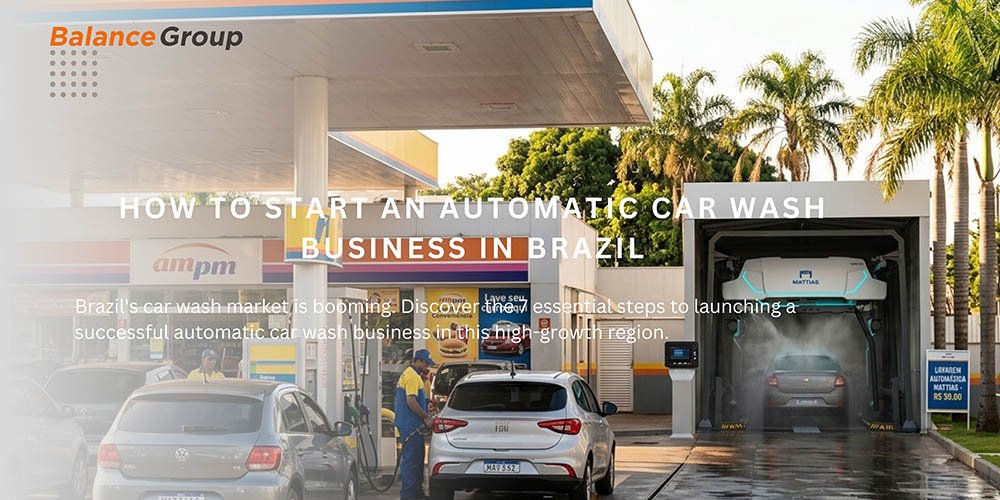
How To Start an Automatic Car Wash Business in Brazil
The Brazilian automotive services market has shown remarkable resilience, fueled by a national fleet that continues to expand despite global economic shifts. With over 46 million passenger cars currently on the road in Brazil and a growing middle class seeking time-saving convenience, the demand for professional automated cleaning is surging. As the culture shifts away from traditional “bucket and sponge” home washing toward sophisticated “lava-jatos,” starting an automatic car wash business in Brazil represents a high-yield opportunity. Below are the seven essential steps to navigating the Brazilian market and launching your venture successfully.
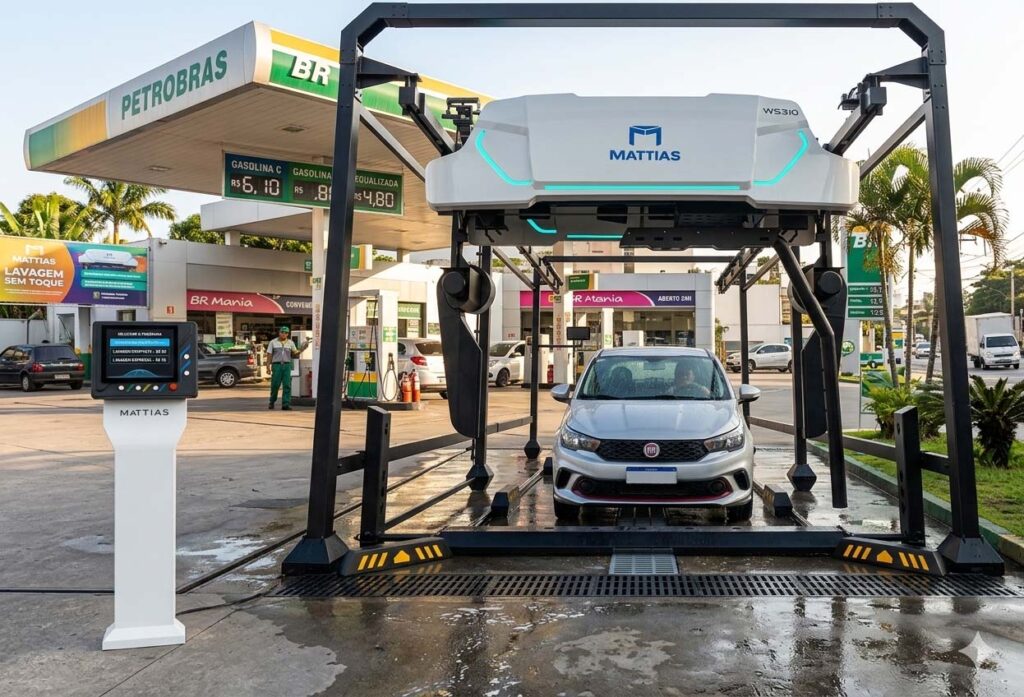
Starting an Automatic Car Wash Business in 7 Steps
1. Research the Automatic Car Wash Landscape in Brazil
Your first critical step is understanding the specific preferences of the Brazilian consumer. While manual “lava-jatos” are common, the “ducha rápida” (fast wash) segment is where the most significant growth lies. For an automatic operation, you must choose between two primary systems:
- In-Bay Automatic Car Washes: These are compact structures where the vehicle remains stationary. They are ideal for gas stations (postos de gasolina) or urban lots with limited space.
- Tunnel Car Washes: These use a conveyor system to move the car through various cleaning stages. Tunnels offer the highest throughput, essential for high-traffic metropolitan areas like São Paulo or Curitiba.
- Touchless vs. Friction: In the Brazilian market, friction washes using “soft-touch” foam brushes are highly effective for the red clay and heavy dust found in many regions, while touchless systems appeal to the luxury vehicle segment.
2. Draft a Comprehensive Business Plan
A robust business plan is your roadmap to securing local investment. Your plan must include an executive summary, a deep-dive market analysis of your specific “bairro” (neighborhood), a breakdown of organizational management, and a detailed financial projection. Given Brazil’s unique tax landscape, your financial plan should account for the “Custo Brasil” (the cost of doing business in Brazil), including labor taxes and import duties for specialized equipment.
3. Navigate Brazilian Legal Entities and Licensing
Once your plan is finalized, you must formalize your business. In Brazil, you will likely choose one of the following structures:
- Sociedade Limitada (LTDA): The most common choice for small to medium businesses.
- Sociedade Anônima (S.A.): For larger, multi-location operations.
- Microempreendedor Individual (MEI): Only applicable for very small, single-person operations (unlikely for high-tech automatic washes).
You must register with the Junta Comercial to obtain your CNPJ (Tax ID). Following this, you will need an Alvará de Funcionamento (Operating License) from the local Prefeitura.
Perhaps most importantly, you must secure environmental permits from agencies like IBAMA or state-level bodies (such as CETESB in São Paulo). Brazilian law is strict regarding wastewater treatment and water reuse systems. Ensuring your facility has a water recycling plant is not just environmentally responsible—it is often a legal requirement for new car wash permits.
4. Estimate Startup Costs and Secure Brazilian Financing
The capital required to start an automatic car wash in Brazil can vary significantly. Depending on whether you are leasing a site or purchasing land, initial investments can range from R$500,000 to over R$2.5 million.
Key budget considerations include:
- Imported vs. National Machinery: Imported equipment may offer advanced tech but carries higher duties.
- Infrastructure: Plumbing, electrical grids capable of high loads, and water filtration systems.
- Real Estate: High-visibility corners near major avenues or shopping centers.
Financing options in Brazil include:
- BNDES (National Bank for Economic and Social Development): Offers specific lines of credit for equipment and innovation.
- Private Bank Loans: Competitive, but require significant collateral.
- Angel Investors: Increasingly interested in the “Smart City” and automotive service sectors.
5. Source High-Performance Equipment and Chemistry
The longevity of your business depends on the quality of your brushes, blowers, and chemical concentrates. In Brazil, hard water can be an issue in certain regions, requiring specific water softeners to ensure your soaps foam correctly. Partnering with a supplier that offers a robust local service network is vital; downtime in a high-volume tunnel can cost thousands of Reais per hour.
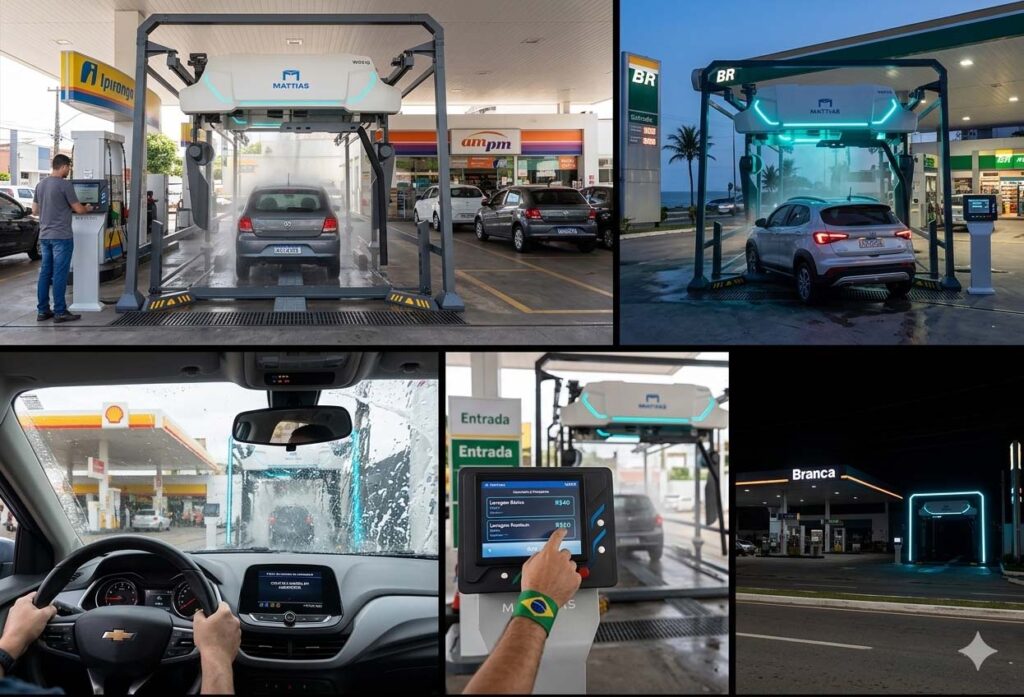
After exploring Brazil’s market entry requirements, your choice of hardware will directly impact your Return on Investment (ROI). Brazilian car owners highly value cleanliness and vehicle protection, especially for the SUVs that dominate the local market. To help you decide, we have compared our two most popular touchless models for the Brazilian region:
| Feature | M-WS310 (High-Efficiency Choice) | M-WS210 (Streamlined Solution) |
| Best For | High-traffic urban hubs (e.g., São Paulo, Rio) | Gas stations or boutique detailing shops |
| Key Tech | 360° Rotating HP Spray + Mirror Specialized Clean | Efficient HP Coverage + Car Wash Count Tracking |
| Drying System | 4 Top Blowers + Optional Side Dryers | 4 Fixed Top Blowers |
| Wash Speed | ~6.5 min (Detailed Deep Wash) | ~5.5 min (Express Service) |
| Vehicle Types | SUVs, Vans, and Sedans | SUVs, Vans, and Sedans |
| Dimensions (L×W×H) | 7.6m × 3.7m × 3.5m | 6.9m × 3.3m × 3m |
6. Site Selection and Construction
In Brazil, location is everything. Your site should ideally be located on the “going-home” side of a major commuter artery. Construction must be managed by firms familiar with Brazilian building codes (ABNT). Pay special attention to the “pátio” (waiting area) and the entry/exit flow to prevent traffic back-ups onto public streets, which can lead to municipal fines.
7. Execute a Localized Marketing Strategy
Marketing in Brazil requires a heavy emphasis on social media and direct engagement. Ensure your Google Business Profile is optimized and that you have a strong presence on Instagram and WhatsApp—the primary communication tools for Brazilian consumers.
Consider these high-impact strategies:
- Assinatura (Subscription) Models: Monthly unlimited wash plans are a new but rapidly growing trend in Brazil.
- Partnerships: Collaborate with local “frotas” (fleets) such as ride-sharing hubs or corporate car pools.
- Eco-Friendly Branding: Emphasize your water recycling capabilities to appeal to the conscious Brazilian consumer.
Here To Help You Lead the Brazilian Car Care Revolution
Navigating the complexities of the Brazilian market requires more than just high-end machinery; it requires a partner who understands the local regulatory and consumer landscape. Mattias Carwash Solutions is proud to offer our decades of global expertise to entrepreneurs in Brazil. From site analysis to the installation of eco-friendly water systems, Mattias provides the products and resources necessary to build a thriving, sustainable car wash business. Contact our regional representatives today to begin your journey.
FAQ (Frequently Asked Questions)
Q: What is the most important permit for a car wash in Brazil?
A: Beyond the standard business license, the Environmental License (Licença Ambiental) is paramount. You must prove to local authorities that your wastewater treatment and water disposal systems meet CONAMA standards to avoid heavy fines or closure.
Q: Is it better to start an independent car wash or a franchise in Brazil?
A: Franchises provide immediate brand recognition and a proven operational model, which can be helpful in the complex Brazilian market. However, an independent model allows for higher profit margins and the flexibility to adapt to specific regional needs.
Q: How much water does an automatic car wash use in a typical Brazilian city?
A: A modern automatic wash uses significantly less water than manual washing, but consumption remains a concern. By installing a water reclamation system, you can recycle up to 80% of your water, which drastically reduces utility costs and meets strict municipal conservation requirements.