
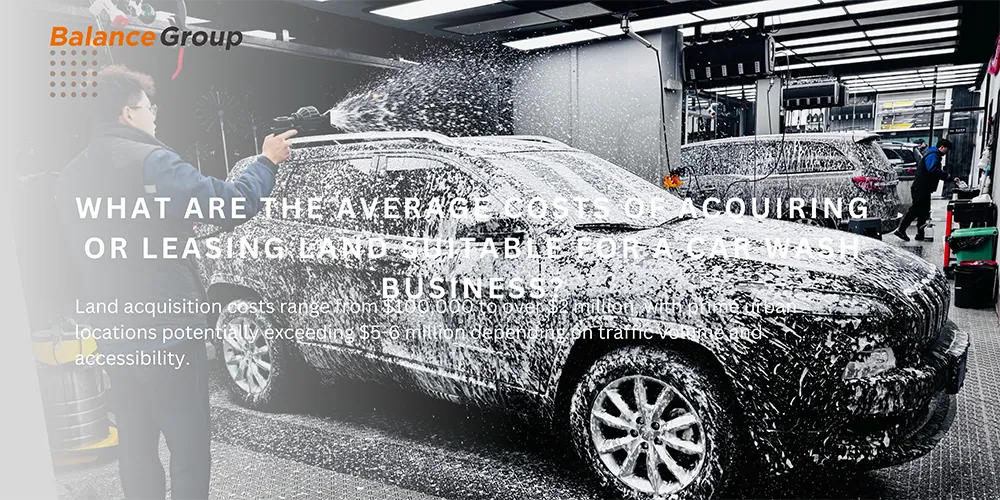
What Are The Average Costs Of Acquiring Or Leasing Land Suitable For a Car Wash Business?
The foundation of any successful car wash business isn’t just gleaming car wash equipment or an innovative service menu; it’s the ground it stands on. Strategic site selection—whether through outright land acquisition or a well-structured lease agreement—is perhaps the single most critical decision that will dictate the long-term viability and profitability of a car wash. The financial implications associated with securing the right piece of real estate are substantial, often ranging from $100,000 to well over $2 million, with premium urban locations potentially commanding prices in excess of $5-6 million. This extensive guide will dissect the multifaceted costs involved, elucidate the factors driving these expenditures, and provide a framework for making informed decisions regarding your car wash location.
The Dynamics of Land Acquisition: Purchasing for Long-Term Value
Opting to purchase land for your car wash operation offers the significant advantage of building long-term asset value. Real estate appreciation can provide a substantial return on investment, and ownership grants complete control over property development and future modifications. However, this strategy inherently demands substantial upfront capital.
Understanding Purchase Price Variance:
The cost of acquiring suitable land is remarkably diverse, influenced primarily by geographical context:
- Rural or Suburban Locations: These areas typically offer more modest price tags, with land acquisition costs commonly falling within the $100,000 to $500,000 range. They might present opportunities for larger plot sizes at lower per-acre costs.
- High-Traffic Urban Sites: In contrast, prime urban locales, characterized by high population density, robust commercial activity, and strong vehicle traffic, can see land prices escalate to $1 million, $2 million, or even beyond, sometimes exceeding $10 million for highly coveted spots in major cities like New York. Such locations often represent areas of high demand and limited availability.
Key Factors Driving Land Purchase Costs:
Beyond the general urban/rural divide, several granular factors exert immense influence on a property’s market value:
- Daily Traffic Counts: For a car wash, which heavily relies on impulse visits, the volume of passing traffic is paramount. A site with high daily traffic counts—often referred to as Annual Average Daily Traffic (AADT)—is far more valuable, as it directly correlates with a larger pool of potential customers. Businesses situated on busy roads, especially major intersections or retail/shopping corridors, tend to perform better.
- Accessibility: Crucially linked to traffic, accessibility refers to the ease with which vehicles can enter and exit the property. Sites featuring multiple, unobstructed entry and exit points, ideally without requiring complex turns or navigating congested roads, are highly prized. Poor access, such as sites located down side roads or with inconvenient turning radii, can deter potential customers, regardless of traffic volume. Traffic speed also plays a role; roads with lower speed limits (e.g., 45 MPH or lower) allow drivers more time to notice and enter the car wash.
- Visibility from Main Roads: A car wash must be easily seen by passing drivers. Locations that offer clear sightlines, ideally from both directions of travel for at least 500 feet, without being obscured by large setbacks, vegetation, or overpasses, are significantly more desirable. Poor visibility often translates to missed opportunities and reduced impulse stops.
- Local Zoning Regulations: This is a critical hurdle. Zoning ordinances dictate how a property can be used and developed. Car washes are considered a specific use type and are often permitted in general commercial or industrial zones. However, some jurisdictions may require special use permits, conditional use permits, or even prohibit car washes entirely in certain areas. Rezoning can be a lengthy, costly, and uncertain process, involving legal fees, consultation fees, and public hearings. Early investigation into zoning is essential to avoid costly delays or outright project abandonment.
- Demographics: The economic and social characteristics of the surrounding population are vital. Factors like average household income, median income, vehicle ownership rates, and population density directly influence a car wash’s potential customer base and average service ticket. Affluent areas might support higher-end full-service washes, while denser suburban populations might favor express or in-bay automatic models. It’s crucial to define the trade area, typically within a one to three-mile radius.
- Competition: While additional car washes can sometimes grow the overall market, understanding the proximity and type of existing competition is crucial. A detailed analysis of competitors’ services, pricing, and market share is necessary.
- Environmental History and Geotechnical Considerations: Before purchasing, environmental due diligence is essential. This involves assessing past uses of the land for potential contamination, which could trigger cleanup liabilities under federal or state statutes. A Phase I Environmental Site Assessment (ESA) is typically the first step, and a more intensive Phase II might be needed if contamination is suspected, involving soil and water sampling. Geotechnical surveys (soil tests) are also vital to ensure the land is stable and suitable for construction.
- Availability of Utilities: Connecting to municipal water, sewer, electricity, and gas lines can incur significant costs, especially if the site is far from existing infrastructure. Land with existing utility connections can significantly reduce initial development expenses.
- Site Topology and Shape: A level, regularly shaped lot simplifies construction and site layout, reducing grading and earthwork costs. Irregularly shaped parcels or those with significant slopes can increase development expenses.
- Development Costs & Impact Fees: Beyond the purchase price, preparing the land for development involves costs for clearing, grading, and utility connections. Many municipalities also impose impact fees to offset the cost of new development on public infrastructure. These fees can add tens of thousands to the project.
The Flexibility of Leasing: Lower Upfront, Higher Ongoing
Leasing land presents an alternative strategy that conserves initial capital but entails higher ongoing operational expenses. This model can be particularly attractive for entrepreneurs who prefer to allocate funds to equipment, marketing, or working capital rather than a large down payment on real estate.
Leasing Cost Components:
Monthly lease payments for land suitable for a car wash typically range from $5,000 to $20,000, influenced by the same location-specific factors that affect purchase prices. Initial deposits and setup costs for a lease can add another $30,000 to $100,000, encompassing security deposits, initial legal fees, and sometimes leasehold improvements. Some industry benchmarks suggest car wash rent often ranges from 10% to 21% of gross sales revenue, varying by sales volume and location.
Types of Commercial Leases (Relevant to Car Washes):
Understanding lease types is crucial, as they define who is responsible for various property expenses:
- Triple Net Lease (NNN Lease): This is a prevalent lease structure for standalone commercial properties like car washes. Under an NNN lease, the tenant is responsible for the base rent plus all property operating expenses, including property taxes, building insurance, and common area maintenance (CAM). While often having a lower base rent, the tenant assumes more financial responsibility for the property’s upkeep and taxes. Many car wash tenants opt for NNN leases with primary terms of 15 to 20 years, often with renewal options.
- Ground Lease: A specific type of NNN lease where the tenant leases only the land, then builds and owns the building and improvements. These are typically very long-term leases (e.g., 20+ years) and at the end of the term, the improvements may revert to the landowner. This is common in the car wash industry.
- Modified Gross Lease: Less common for standalone car washes, but can be seen. Here, some operating expenses are included in the base rent, with increases often passed through to the tenant.
- Gross Lease: In this structure, the tenant pays a fixed rent, and the landlord covers all operating expenses. This is generally uncommon for commercial properties like car washes due to the nature of their operations and dedicated site.
Lease Terms and Stability:
Lease terms usually span 10-20 years with crucial renewal options. Longer terms provide greater stability for business planning, allowing sufficient time to recoup investment in equipment and build customer loyalty. Secure lease terms are paramount as they offer a stable operational foundation without the unpredictability of short-term renewals or potential forced relocation.
The Overriding Importance of Site Characteristics: Beyond Raw Price
“Site characteristics matter more than raw price for car wash success.” This statement cannot be overstressed. A seemingly less expensive site with inherent flaws often proves to be more costly in the long run than a premium location with optimal characteristics. Lost revenue due to poor visibility or access, ongoing issues with traffic flow, or unanticipated development challenges can quickly erode any initial savings.
Ideal Site Characteristics for Car Wash Operations:
- Multiple Entry/Exit Points and Adequate Queuing Space: This is critical for preventing traffic congestion, especially during peak hours. Long, easy-to-navigate queuing lanes are essential to accommodate multiple vehicles without backing up onto public roads. Local planners often review a site’s stacking capacity to ensure this.
- Sufficient Lot Size and Dimensions: For an express tunnel car wash, approximately 1 acre of land is often recommended, with a minimum depth of 225 feet needed to accommodate a 125-foot conveyor system, plus space for vacuum areas and turning radii.
- Proximity to Demand Drivers: Locating near retail centers, grocery stores, gas stations, residential areas, or business parks significantly increases exposure to potential customers. These high-frequency traffic generators are ideal for car wash sites.
- Compliance with Environmental Regulations: Car washes generate significant wastewater. Proper drainage, stormwater controls, and the ability to implement water reclaim systems are often mandatory due to local environmental regulations. Environmental permits, particularly for wastewater discharge, are a crucial part of the process.
- Noise and Operating Hours: Car wash blowers and vacuums can generate significant noise. Sites near residential areas may face restrictions on noise levels and operating hours, necessitating design solutions for sound dampening or stricter operational schedules.
- Favorable Traffic Speed: Sites along roads where traffic moves at a speed that allows drivers to notice the car wash, signal, and safely turn in are ideal. Extremely high-speed roads with limited turning options can reduce “capture rates” – the percentage of passing traffic that becomes a customer.
- Positive Community Context: Neighbors and local community groups can impact the permitting process, particularly if there are concerns about traffic, noise, or environmental impact. Engaging with local stakeholders early can prevent delays or denial.
Financial Implications and Maximizing Return on Investment
The cost of land profoundly impacts the overall financial viability of a car wash. A prime location, while more expensive initially, can lead to significantly higher revenues, increased throughput, and ultimately, a stronger return on investment (ROI). Conversely, compromising on location to save money upfront can condemn a business to suboptimal performance.
Investment Strategy: Site selection is not an area to “penny-pinch.” If projections, backed by thorough market research and traffic studies, indicate high volume potential at a specific location, the additional investment in that premium site is usually justified.
Professional Guidance: Given the complexities, engaging a team of experts is highly recommended:
- Commercial Real Estate Brokers: Specialists with deep local market knowledge can identify suitable properties and assist with negotiations.
- Car Wash Site Selection Consultants: These experts understand the specific needs of a car wash and can perform detailed analyses of traffic, demographics, and site logistics.
- Attorneys: Crucial for navigating purchase agreements, lease contracts, zoning applications, and environmental compliance.
- Environmental Consultants: To conduct due diligence and address any potential environmental concerns.
- Civil Engineers: For assessing site feasibility, grading, drainage, and infrastructure requirements.
Conclusion
The decision to acquire or lease land for a car wash is arguably the single most impactful factor determining its long-term success. While land acquisition costs vary dramatically—from $100,000 in less developed areas to over $6 million in prime urban centers—the ultimate value of a site transcends its purchase or lease price. Factors such as high traffic volume, optimal accessibility, clear visibility, appropriate zoning, favorable demographics, and the ability to integrate efficiently within the surrounding infrastructure are non-negotiable prerequisites for sustained profitability. A thorough, diligent approach to site selection, backed by professional expertise and a comprehensive understanding of both purchase and leasing options, will pave the way for a flourishing car wash enterprise. Neglecting the criticality of location, merely in pursuit of a lower initial cost, risks undermining the entire business venture. Invest wisely in your land, and the returns can truly be transformative.
Frequently Asked Questions (FAQs) about Car Wash Land Acquisition and Leasing
1. What are the typical costs for acquiring or leasing land suitable for a car wash?
Land acquisition costs for a car wash can range from $100,000 to over $2 million. Prime urban locations in high-traffic areas might even exceed $5-6 million. For leasing, monthly payments typically fall between $5,000 and $20,000, with initial deposits and setup costs adding $30,000 to $100,000.
2. What drives the high cost of land for a car wash in urban areas?
Urban land is more expensive due to higher demand, limited availability, extensive infrastructure, and proximity to densely populated areas. These locations typically offer superior traffic volume, accessibility, and visibility, all of which are critical for a car wash’s success.
3. Is it better to buy or lease land for a car wash?
Both options have pros and cons.
Purchasing provides long-term asset value, potential for appreciation, and complete control over the property, but requires substantial upfront capital.
Leasing offers lower initial costs, freeing up capital for equipment and operations, but you don’t build equity and have ongoing rental expenses and terms dictated by a landlord. A Triple Net Lease (NNN) or Ground Lease is common for car washes.
4. What key characteristics make a land site “ideal” for a car wash, beyond just price?
An ideal site boasts:
- High Daily Traffic Counts: Essential for impulse visits.
- Excellent Visibility: Easy for drivers to spot from main roads (500+ feet sightlines recommended).
- Easy Access: Multiple, unobstructed entry and exit points.
- Adequate Queuing Space: Enough room for cars to line up without blocking public roadways.
- Favorable Zoning: Land explicitly zoned for commercial or automotive use, minimizing rezoning complexities.
- Suitable Demographics: A target customer base (e.g., sufficient household income, car ownership rates).
- Accessible Utilities: Proximity to water, sewer, and electrical connections.
5. How important are traffic counts to a car wash’s success, and how do they impact land value?
Traffic counts are extremely important because car washes heavily rely on “drive-by” or impulse customers. High traffic volume increases the pool of potential customers. Consequently, land in high-traffic corridors commands a higher value. However, high traffic alone isn’t enough; easy access and good visibility from that traffic are also critical for a good “capture rate” (the percentage of passing traffic that turns into a customer).
6. What role do zoning regulations play in site selection for a car wash?
Zoning is a fundamental and often complex hurdle. Car washes are typically permitted in commercial or industrial zones, but some areas may require specific Conditional Use Permits or Special Use Permits. Misunderstanding or misjudging zoning can lead to significant delays, added legal/consultation costs for rezoning attempts, or even outright denial of the project. It’s essential to investigate local zoning laws early in the site selection process.
7. What environmental due diligence is required when acquiring car wash land?
Environmental due diligence is crucial to identify and mitigate potential environmental risks and liabilities, particularly concerning past uses of the land. This typically starts with a Phase I Environmental Site Assessment (ESA) to identify recognized environmental conditions (RECs). If RECs are found, a more in-depth Phase II ESA involving soil and water testing might be necessary to determine the extent of contamination and potential remediation costs.
8. What are common challenges or “hidden costs” to watch out for with car wash land?
Beyond the purchase or lease price, be aware of:
- Rezoning Costs & Delays: If the desired site isn’t zoned correctly.
- High Utility Connection Fees: Especially for sites distant from existing main lines.
- Site Development & Preparation: Costs for excavation, grading, and paving.
- Environmental Remediation: Unexpected cleanup costs if contamination is discovered.
- Impact Fees: Local government charges for infrastructure improvements due to new development.
- Poor Site Design/Layout: A property with difficult geometry or limited frontage can incur higher construction costs or reduce operational efficiency.
- Noise Abatement Requirements: Costs associated with mitigating operational noise, particularly near residential zones.