
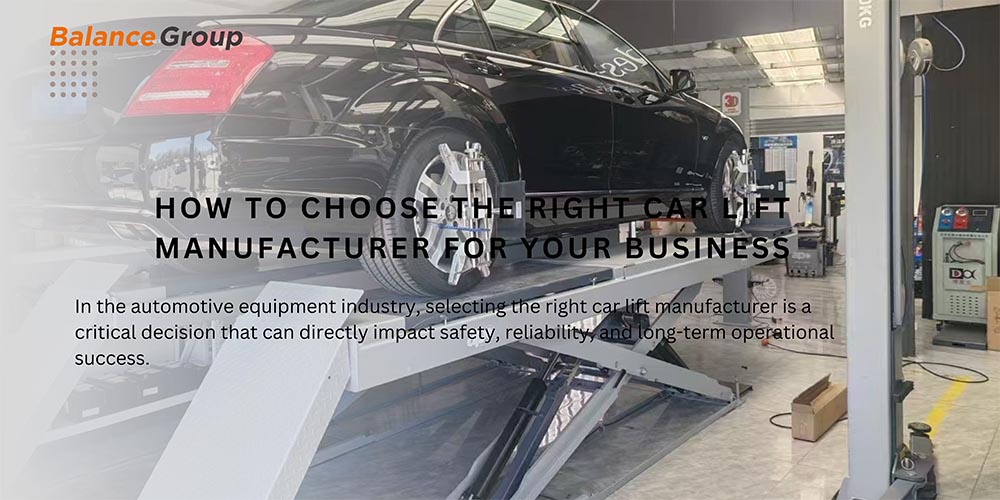
How to Choose the Right Car Lift Manufacturer for Your Business
In the automotive equipment industry, selecting the right car lift manufacturer is a critical decision that can directly impact safety, reliability, and long-term operational success. With numerous manufacturers offering a wide range of automotive lifts, making an informed choice can be challenging. This comprehensive guide will share how to evaluate and select the ideal car lift manufacturer for your garage or shop.
We’ll focus on key considerations, quality indicators, and essential factors to examine when partnering with a manufacturer. By the end of this article, we hope you’ll have the knowledge and confidence to make a strategic manufacturer selection that benefits your facility and enhances its service capabilities.
Introduction to Car Lift Manufacturers
A car lift manufacturer is a specialized company that designs, engineers, and produces automotive lifting equipment for service facilities. These manufacturers develop equipment engineered to safely elevate vehicles, allowing maintenance teams proper access for repairs and service. They’re responsible for ensuring their lifts can handle specific weight capacities and provide technicians with stable, reliable platforms.
The evolution of lift manufacturing has progressed from simple mechanical designs to sophisticated hydraulic systems with advanced safety features. Modern manufacturers utilize precision engineering, quality materials and rigorous testing protocols to produce equipment that meets industry standards.
Choosing the right manufacturer for your specific needs is essential because it can help:
Ensure safety compliance: Reputable manufacturers produce lifts that meet or exceed safety standards, protecting both technicians and vehicles. Improve equipment reliability: Quality manufacturers create durable lifts designed for consistent performance and minimal downtime. Access technical support: Established manufacturers offer comprehensive support, including installation guidance, maintenance assistance, and troubleshooting expertise. Guarantee parts availability: Leading manufacturers maintainan inventory of replacement parts, ensuring your lift can be serviced throughout its operational life.
Key Considerations When Selecting a Car Lift Manufacturer
It’s important to understand the differences between various manufacturers, as each offers unique strengths that could be beneficial for specific operational requirements.
Industry Reputation and Experience
A manufacturer’s history and standing in the industry can provide valuable insights into their reliability and product quality. Look for manufacturers with:
Established track record: Companies with decades of experience have refined their engineering practices and production techniques. Industry recognition: Manufacturers recognized by automotive service associations or those that have received industry awards demonstrate commitment to excellence. Customer testimonials: Feedback from other garage owners or service managers can provide real-world insights into a manufacturer’s reliability.
Manufacturers with extensive experience typically offer more refined products that address common operational challenges encountered in automotive service environments.
Product Quality and Certification
Quality assurance is a critical factor when selecting a lift manufacturer. The best manufacturers demonstrate their commitment to safety and reliability through:
ALI certification: The Automotive Lift Institute certification indicates that lifts have undergone rigorous testing for safety and performance. Quality control processes: Leading manufacturers implement comprehensive quality control protocols during production. Engineering standards: Look for manufacturers that adhere to ANSI/ALI standards and other industry specifications for design and manufacturing.
Certified lifts provide assurance that the equipment has been thoroughly tested and meets established safety requirements, reducing liability risks and potential operational issues.
Product Range and Specialization
Different manufacturers may specialize in specific types of lifts or cater to particular market segments. Evaluate whether a manufacturer offers:
Comprehensive product line: Manufacturers that produce two-post lifts, four-post lifts, scissor lifts, and specialty lifts can provide options that match your specific requirements. Customization capabilities: Some manufacturers can modify their standard designs to accommodate unique facility constraints or specialized vehicle service needs. Industry-specific solutions: Certain manufacturers focus on particular sectors, such as heavy-duty vehicles, exotic cars, or commercial fleets.
A manufacturer with a diverse product range may better accommodate your facility’s evolving needs as your business grows or service offerings expand.
Support Services
Support services are a crucial component of the manufacturer-customer relationship that extends beyond the initial purchase. Consider manufacturers that provide:
Installation assistance: Professional installation services or detailed installation documentation ensure proper setup of your lift. Technical support: Readily available technical assistance helps resolve operational issues quickly, minimizing downtime. Training programs: Comprehensive training on lift operation and maintenance helps ensure safe and effective use. Warranty coverage: Strong warranty terms reflect a manufacturer’s confidence in their product quality and commitment to customer satisfaction.
Manufacturers that offer comprehensive support services demonstrate their commitment to long-term customer relationships and product reliability.
Evaluating Manufacturer Capabilities
A thorough understanding of a manufacturer’s production capabilities and quality control processes can provide valuable insights into their product reliability.
Manufacturing Facilities
The quality of a manufacturer’s production facilities often correlates with the quality of their products. Consider:
Modern equipment: Manufacturers utilizing advanced manufacturing technology typically produce more precise and consistent components. Production capacity: Sufficient capacity ensures the timely fulfillment of orders and the consistent availability of replacement parts. Quality control systems: Robust inspection procedures throughout the manufacturing process help identify and address potential issues before products leave the facility.
Manufacturers willing to provide facility tours or detailed information about their production processes demonstrate transparency and confidence in their operations.
Research and Development
Investment in research and development indicates a manufacturer’s commitment to continuous improvement and innovation. Look for:
Engineering expertise: Dedicated engineering teams focused on product refinement and innovation. Testing facilities: In-house testing capabilities allow manufacturers to verify performance and durability before products reach customers. New product development: Regularly introducing improved designs or new features demonstrates a forward-thinking approach.
Manufacturers actively engaged in research and development typically offer more advanced products with enhanced safety features and operational benefits.
Supply Chain Management
A manufacturer’s supply chain practices can impact product quality and availability. Evaluate:
Material sourcing: Quality manufacturers use premium materials from reliable suppliers. Component standardization: Standardized components across product lines simplify maintenance and parts replacement. Inventory management: Effective inventory systems ensure consistent availability of replacement parts.
Efficient supply chain management contributes to product consistency and long-term supportability of installed lifts.
Service and Support Considerations
Understanding a manufacturer’s approach to customer service and technical support is essential when making your selection.
Installation Services
Professional installation is crucial for proper lift operation and safety. Manufacturers may offer:
Factory-trained installers: Technicians specifically trained on their equipment ensure correct installation. Installation verification: Post-installation inspection and certification confirm proper setup. Site preparation guidance: Recommendations for concrete specifications, electrical requirements, and space considerations.
Proper installation is fundamental to lift safety and performance, making manufacturer installation services a valuable consideration.
Warranty and Service Programs
A manufacturer’s warranty terms reflect their confidence in product quality and commitment to customer satisfaction. Assess:
Warranty duration: Longer warranty periods typically indicate greater manufacturer confidence in product durability. Coverage scope: Comprehensive warranties covering structural components, hydraulic systems, and electrical elements provide better protection. Service network: An extensive network of authorized service providers ensures prompt assistance when needed.
Manufacturers offering robust warranty protection and accessible service options demonstrate their commitment to product reliability and customer support.
Parts Availability
Long-term parts availability is essential for maintaining lift operation throughout its service life. Consider:
Parts inventory: Manufacturers maintaining extensive parts inventories can provide rapid replacement of worn or damaged components. Lead times: Short lead times for non-stock parts minimize equipment downtime. Compatibility: Standardized components across model lines simplify maintenance and parts management.
Consistent parts availability ensures that your lift can be maintained properly throughout its operational life, maximizing return on investment.
Making Your Decision
When finalizing your selection of a car lift manufacturer, consider these practical steps:
Request detailed quotes: Comprehensive quotes should include equipment specifications, delivery timelines, installation requirements, and warranty terms. Verify references: Contact existing customers to gain insights into their experiences with the manufacturer. Conduct site visits: If possible, visit facilities using the manufacturer’s lifts to observe them in operation. Review certification: Confirm that the manufacturer’s products meet ALI certification requirements and other relevant standards. Assess total cost of ownership: Consider not just initial purchase price but also installation costs, maintenance requirements, and operational efficiency.
Partner With a Reputable Car Lift Manufacturer
Selecting the right car lift manufacturer is a strategic decision that impacts your facility’s safety, efficiency,y and service capabilities. By carefully evaluating manufacturers based on reputation, product quality, support services, and long-term reliability, you can identify a partner that aligns with your operational needs and business objectives.
The ideal manufacturer provides not just quality equipment but also becomes a trusted partner in your facility’s success, offering ongoing support, technical expertise, and reliable products that enhance your service capabilities. Invest time in thorough research and evaluation to ensure you select a manufacturer whose values, capabilities, and support services align with your business requirements.